A Winter Story Beyond Convention
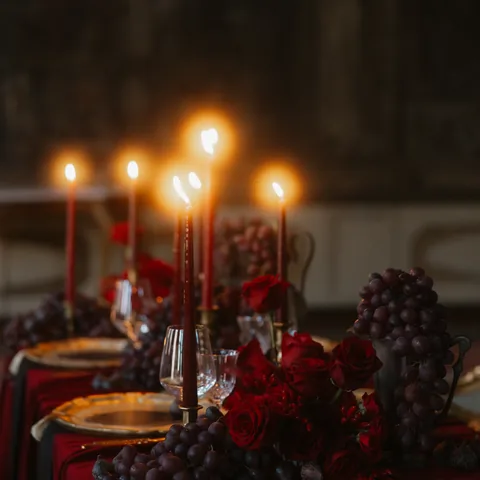
Winter weddings are often associated with deep colour, abundant candlelight and overtly seasonal details. Those choices can be beautiful, but they are not the only way to express the character of the season.
Planned and creatively directed by Marcia Fernandes & Co., A Timeless Winter began with a quieter question: could a winter wedding feel luminous, romantic and enduring without depending on recognisable winter motifs?
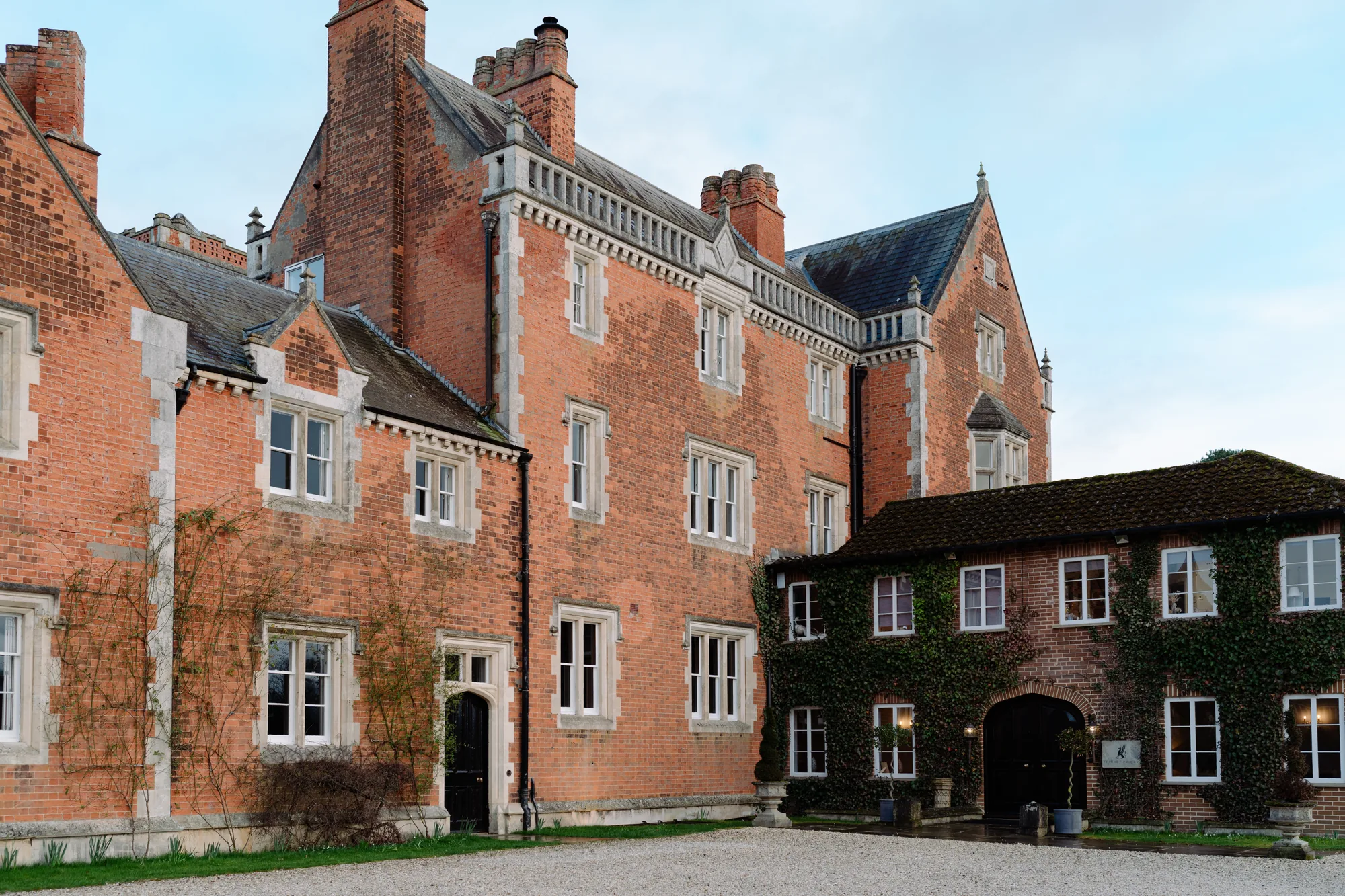
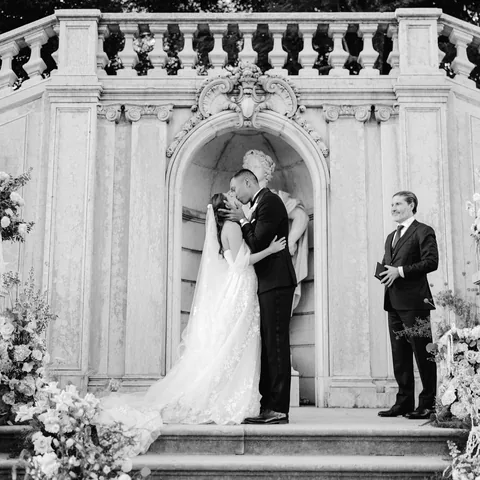
At Thicket Priory, the answer emerged through the relationship between the historic interiors, restrained florals, tonal whites and the softness of natural light. The season informed the design, but it did not become a theme.
Beginning with the Feeling of the Season
A considered seasonal design begins with atmosphere rather than decoration. Winter brings a particular quality of stillness, a lower angle of light and a natural desire for intimacy. These qualities can guide the celebration more meaningfully than a literal collection of seasonal references.
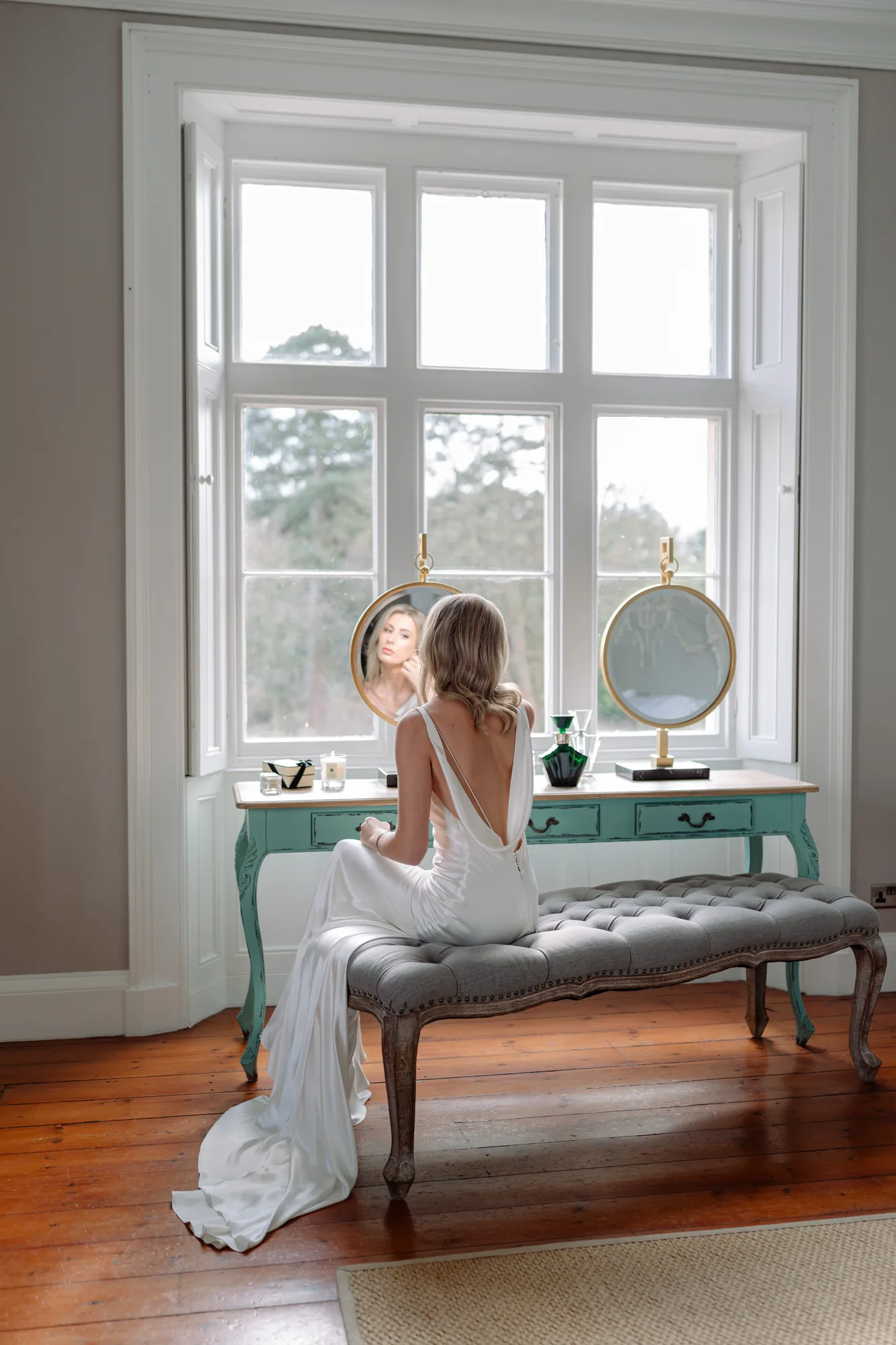

For this editorial, the objective was to create a sense of quiet warmth. The historic setting provided depth, while fluid fabrics and delicate floral forms brought lightness and movement. Nothing needed to announce winter directly; the season was present in the palette, the light and the way the elements related to one another.
The season informed the design, but it did not become a theme.
Reconsidering the Winter Palette
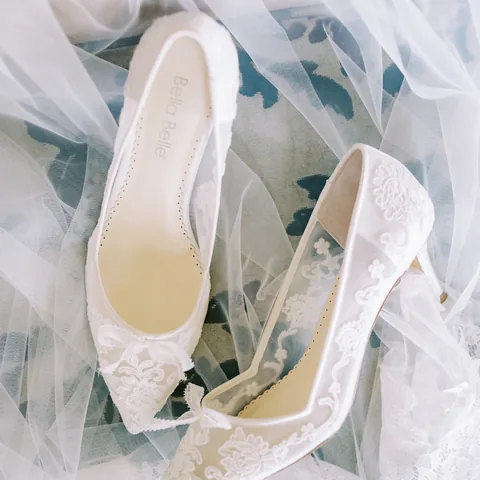
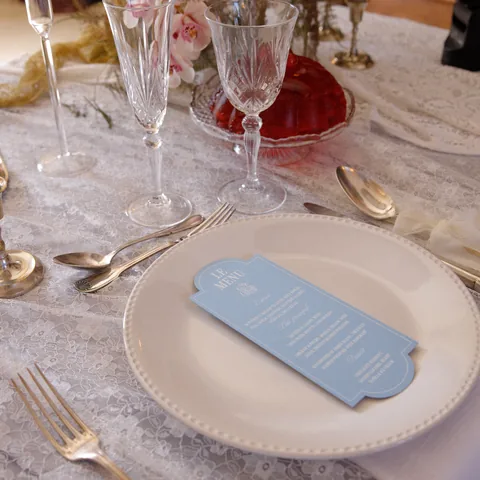
White, ivory and cream can appear simple when considered separately. Together, they offer considerable depth. Subtle differences in tone allow fabric, flowers, paper and architecture to remain distinct while preserving a calm visual language.


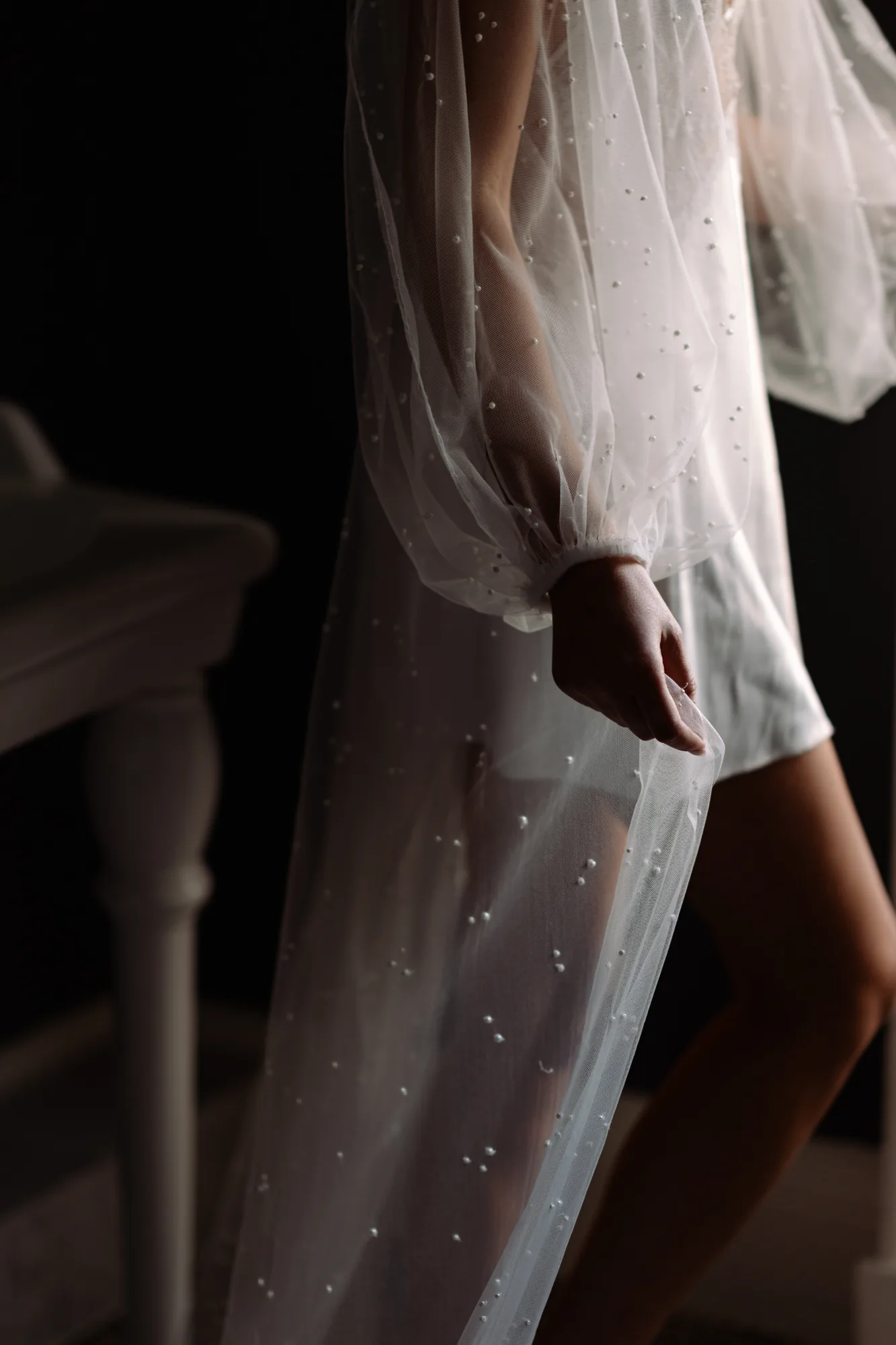
The palette also responded to Thicket Priory itself. Cooler whites reflected the clarity of winter light, while warmer ivory and cream softened the interiors. Rather than introducing contrast through several colours, the design relied on tonal variation and the character of each material.
For couples drawn to a restrained palette, this distinction matters. A limited colour story should not make every element identical. Its richness comes from variation within the palette and from understanding how each tone changes in natural and artificial light.
Creating Warmth as an Experience
Warmth is not created by colour alone. It is also shaped by how a room feels, how guests gather and how the celebration moves from daylight into evening.
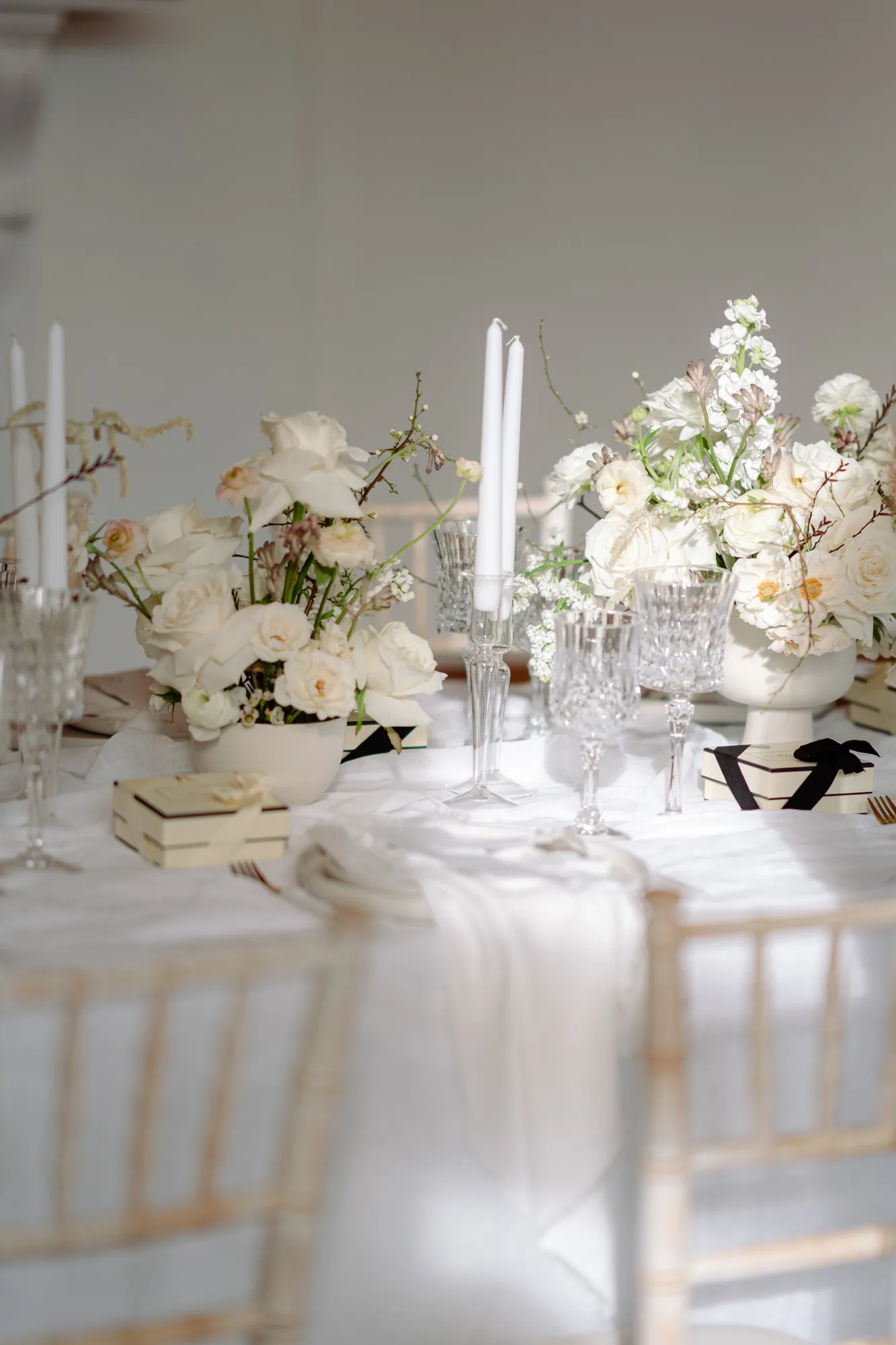
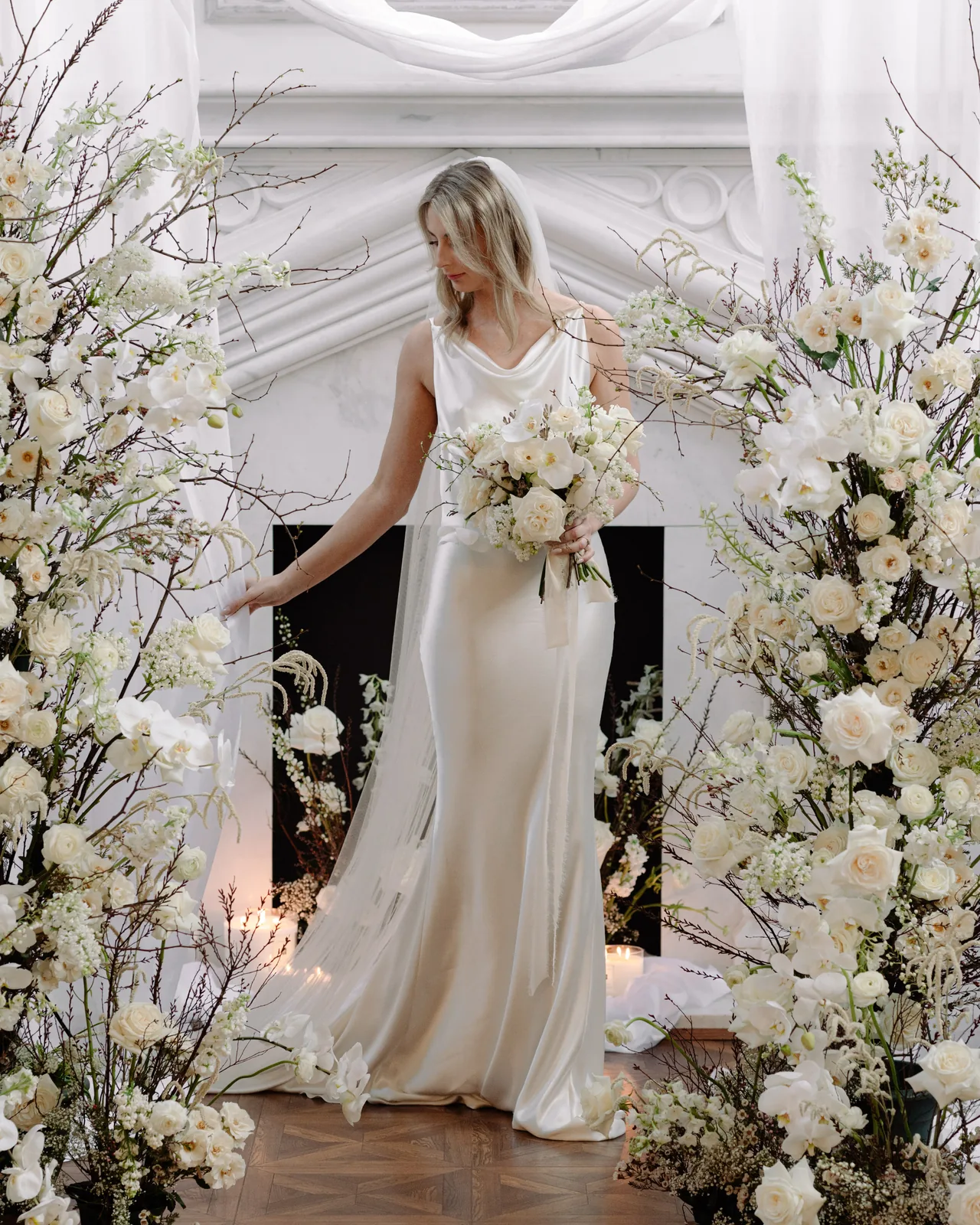
Soft draping and light florals brought intimacy to the historic interiors without adding visual weight. Their scale and placement allowed the architecture to remain present, while creating a more personal relationship between the setting and the editorial story.
In a real winter wedding, this principle extends beyond design. Guest comfort, arrival times, transitions between spaces, lighting and the pace of the day all contribute to the atmosphere. A room may look warm in photographs and still feel disconnected if the practical experience has not received the same attention.
Allowing Texture to Carry the Design
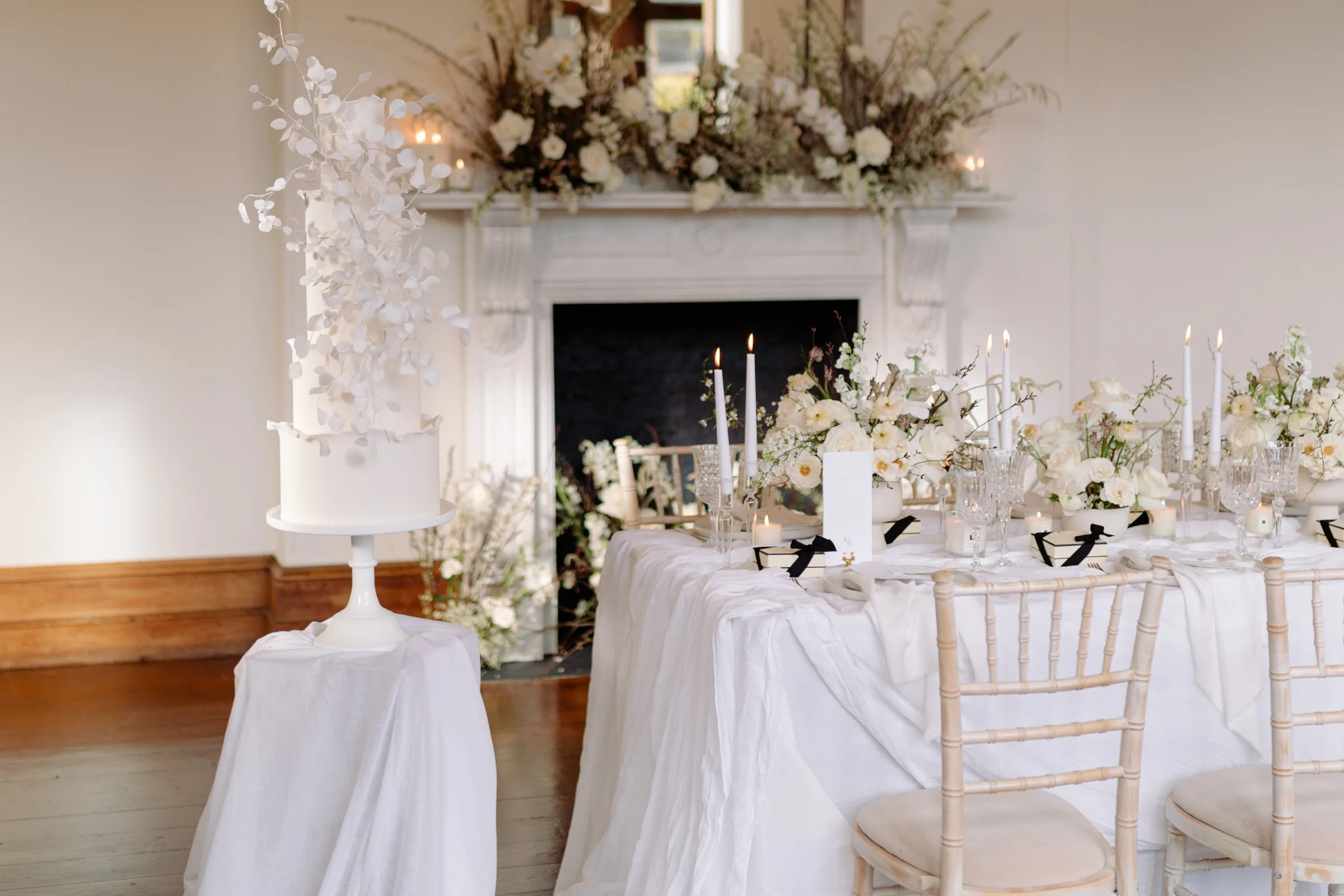
When colour is deliberately limited, texture carries more of the visual narrative.

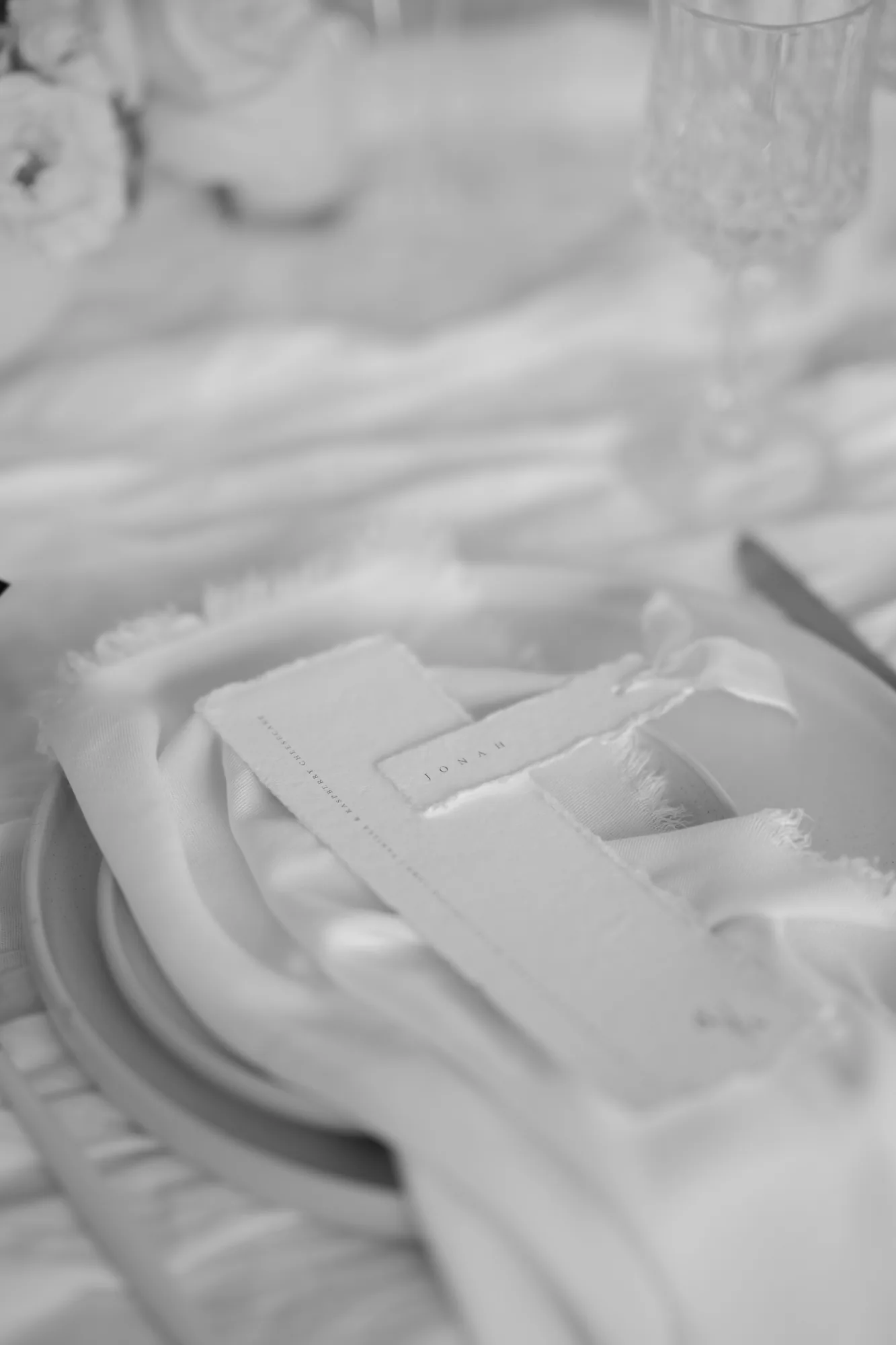
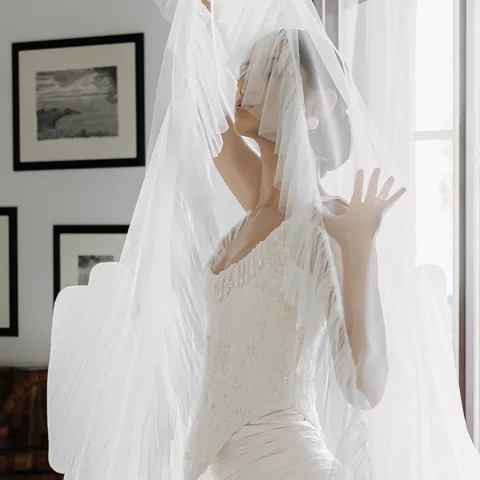
Fluid fabric introduced movement. Delicate flowers added softness and irregularity. The aged surfaces and architectural details of Thicket Priory provided a quiet contrast to these lighter elements. Each material remained recognisable, which gave the composition depth without disturbing its clarity.
Texture is especially valuable in winter because it responds to changing light. The same fabric or floral detail can appear crisp during the day and softer as the interior becomes more intimate. This allows a restrained design to evolve naturally without requiring constant decorative change.
Working with Winter Light
Winter light is limited, but its brevity can make it particularly expressive. The editorial embraced the contrast between illuminated areas and shadow rather than attempting to make every room feel equally bright.
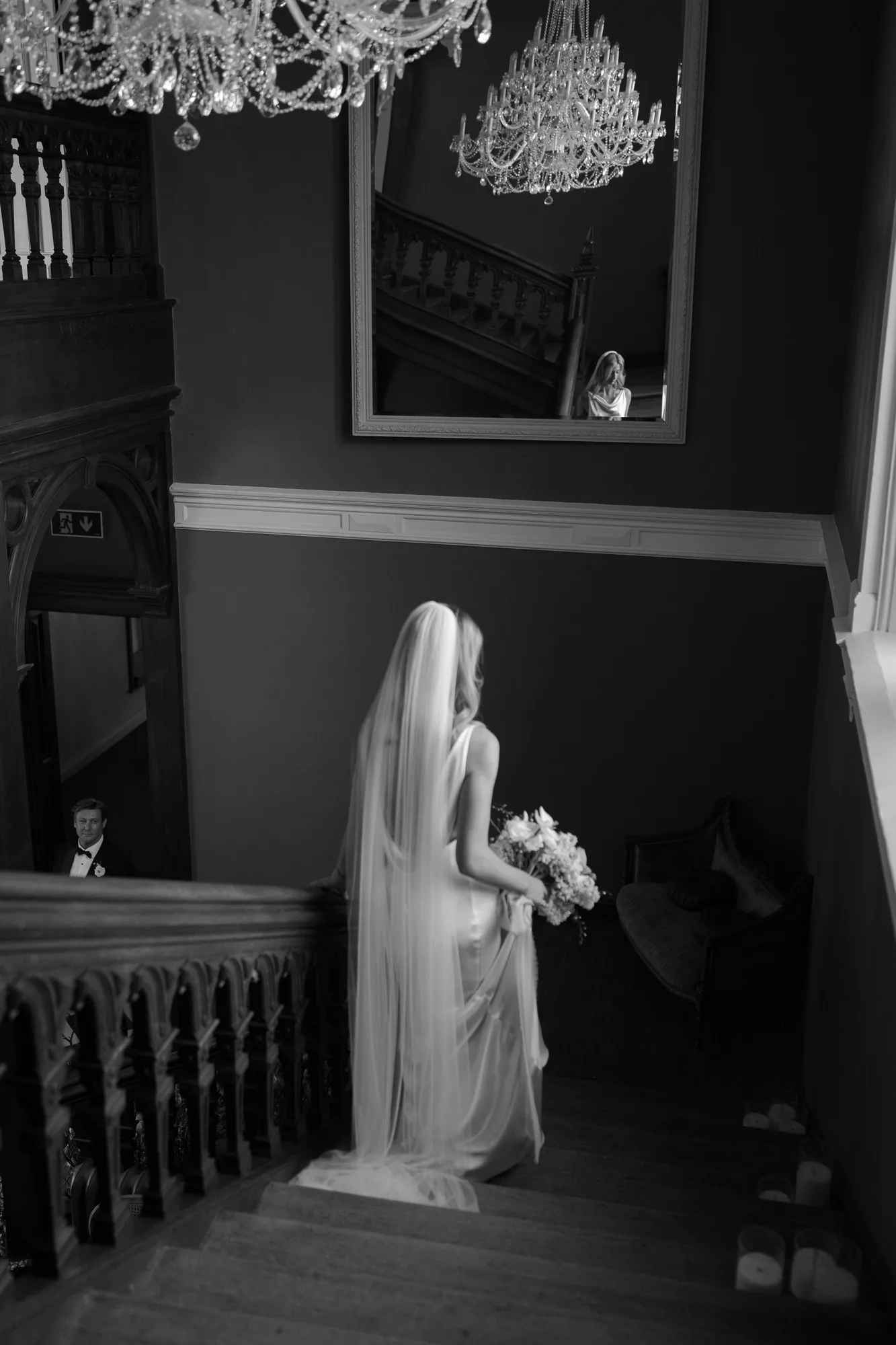
For couples planning a winter celebration, light should be considered early. Ceremony timing affects portraits; the transition into dinner changes the mood of the interiors; candlelight and architectural lighting influence how colours and textures are perceived.
These are not decisions to leave until the final styling stage. They are part of the experience and should inform the timeline, spatial plan and creative direction from the beginning.
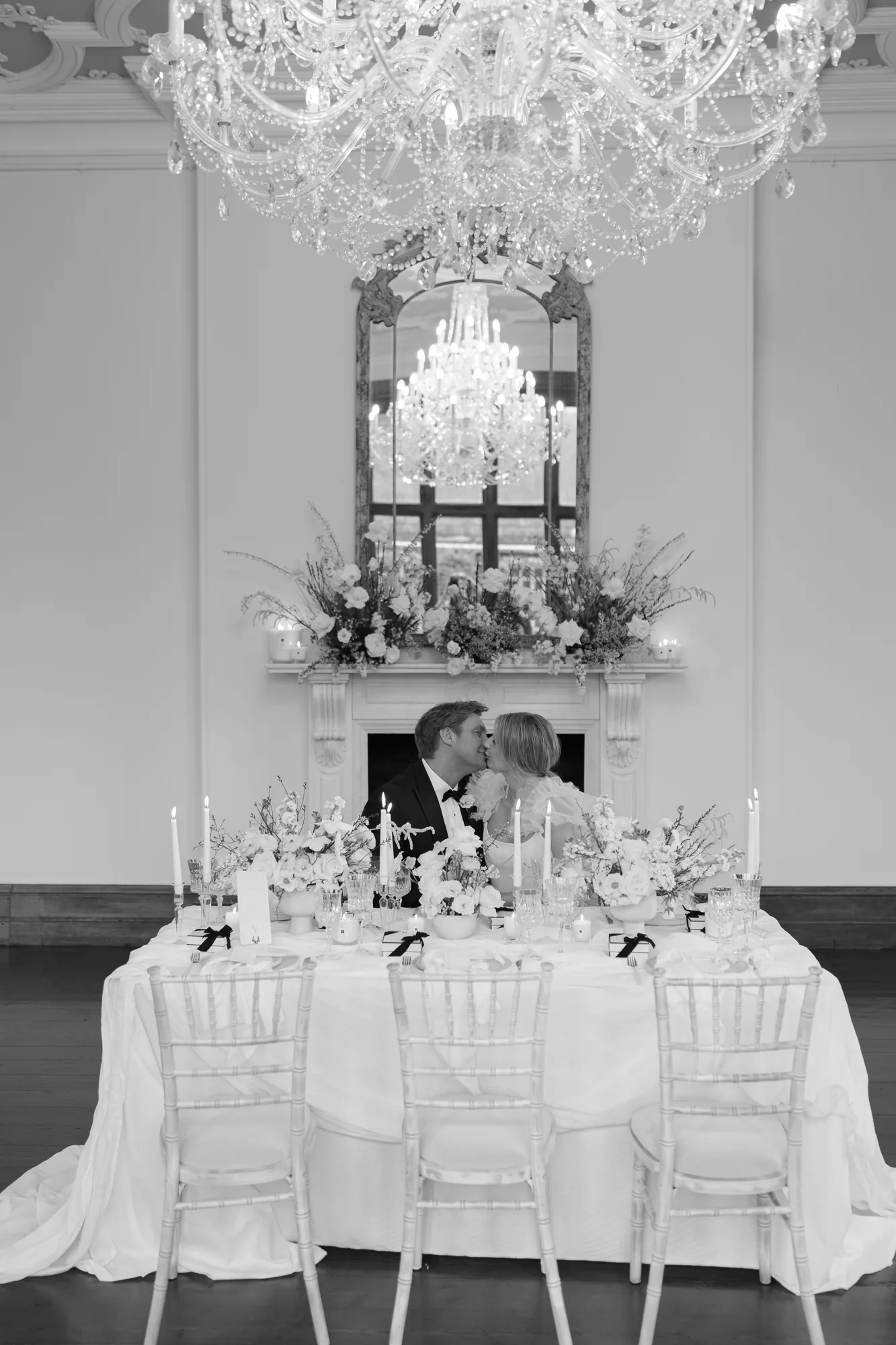
Winter light is not a limitation to disguise. It is part of the atmosphere to design around.
Designing a Winter Wedding That Feels Personal
A winter wedding does not need to become rustic, heavily decorated or conventionally festive unless those choices genuinely represent the couple.
Begin with the qualities of the season that feel most relevant to you. It may be the intimacy of gathering indoors, the clarity of the landscape, the elegance of evening light or the possibility of creating a slower, more atmospheric celebration.
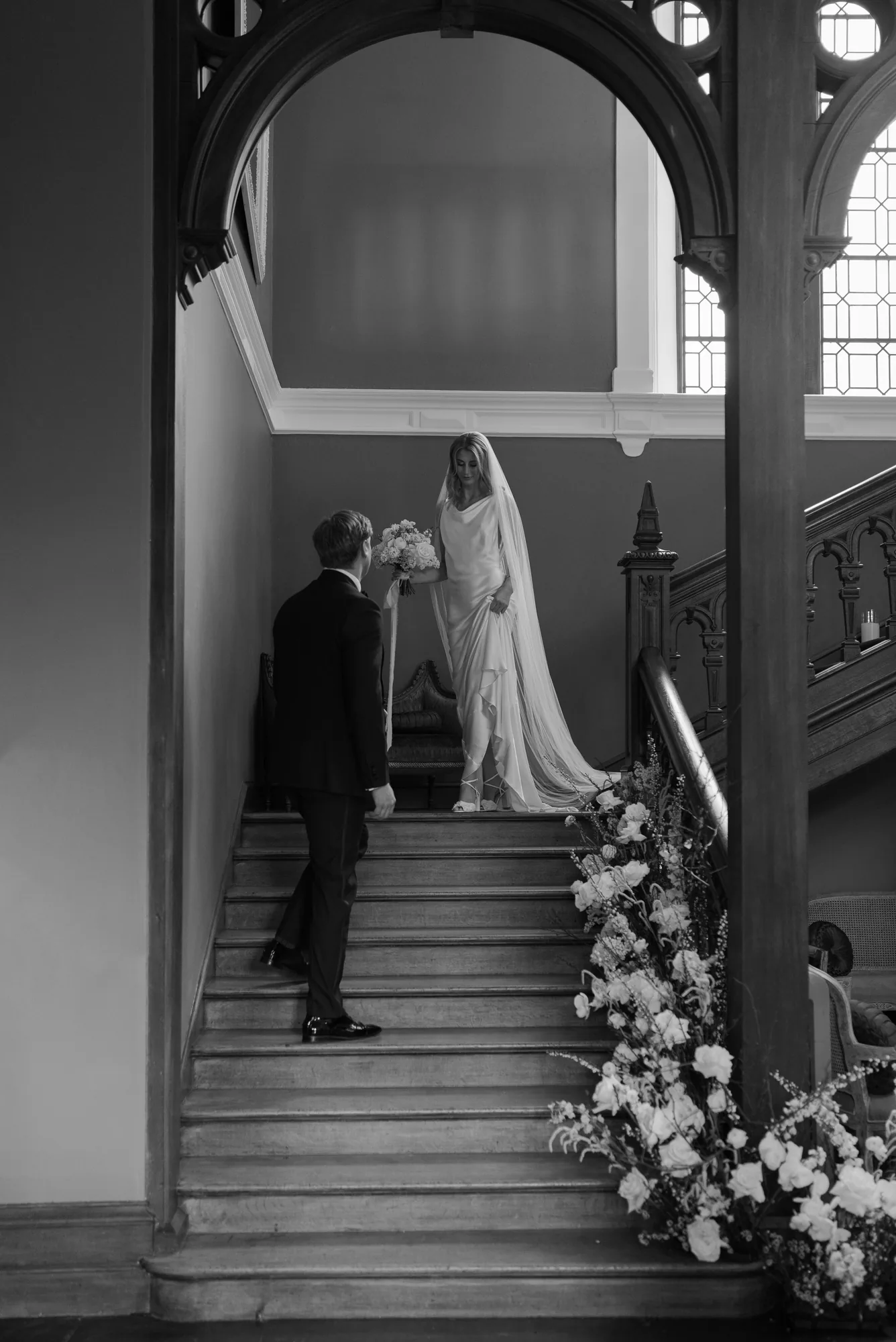

Choose a venue that supports that experience in both beauty and function. Look carefully at its winter light, heating, guest flow and alternative spaces. Build depth into a restrained palette through material and tone and treat the contingency plan as part of the design rather than a lesser version of it.
The purpose is not to follow a particular idea of what a winter wedding should look like. It is to create a celebration that feels natural to the season and recognisable as your own.
A Quiet Expression of Winter
A Timeless Winter presents an alternative to seasonal excess: an editorial shaped by softness, clarity and an appreciation for the quieter character of winter.
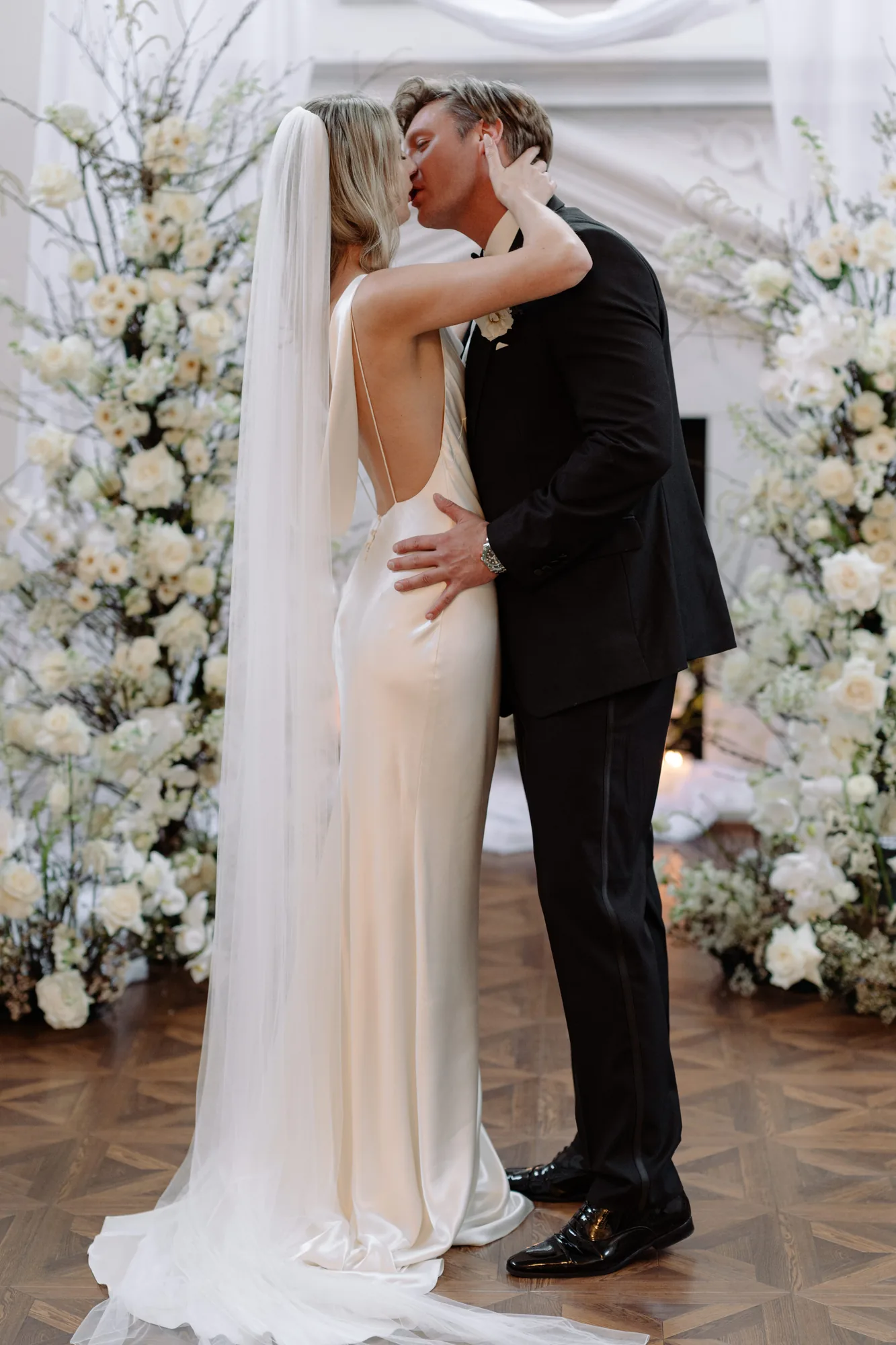
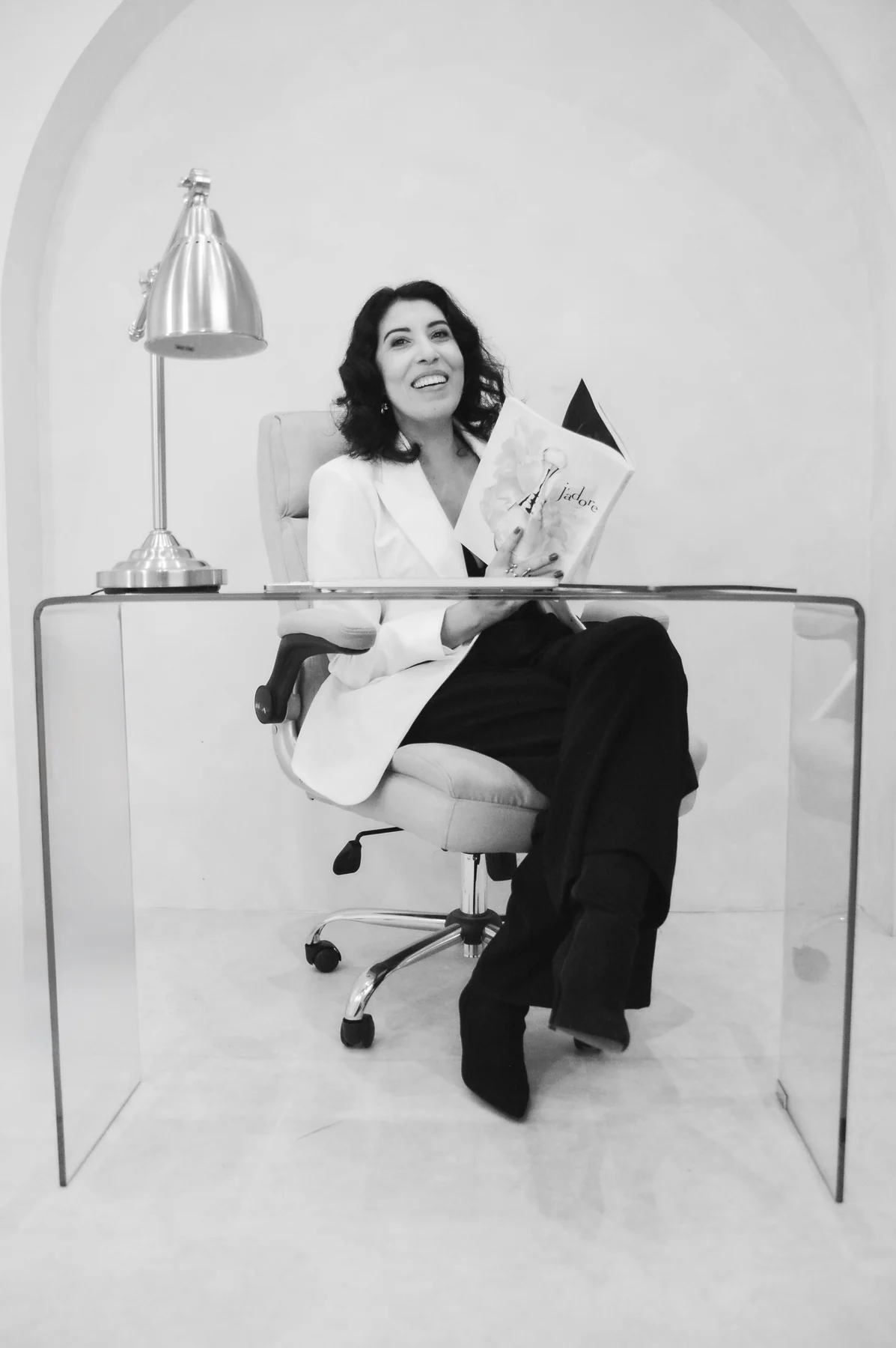
What stayed with me was the way restraint allowed every element to become more visible. The architecture retained its presence. The florals felt delicate rather than decorative. Light and shadow became part of the composition.
For a wedding, this same approach creates room for what matters most: a setting with atmosphere, an experience that feels warm and a design connected to the couple rather than to convention.

Planning a winter wedding in the UK or elsewhere in Europe? I would love to create a celebration that feels personal to you, considered for the season and naturally connected to its setting.
Images by Kamila Nowak Photography
Editorial: A Timeless Winter · Planning & Creative Direction: Marcia Fernandes & Co. · Venue: Thicket Priory · Floral Design: Fox Flora · Stylist: Stories of Events · Videography: Freyafilmco · Cake Design: Poppy Pickering · Stationery: Lucy McSpirit · Hair Stylist: Sophie Jakeman · Dress Designer: Alexandra Grecco · MUA: I AM Bridal MakeUp